
An auto repair website has a practical job: help a driver confirm that the workshop can solve the problem, find the location, understand the likely price, and book a suitable visit. For the owner, it is an acquisition channel, a way to qualify enquiries, and a tool for balancing workshop capacity. A website containing only a phone number and broad promises leaves every decision with reception staff.
Professional auto service website development begins with real operations: specialisation, equipment, service bays, technician schedules, diagnostic rules, parts supply, and customer communication. Design and functionality should support this process rather than copy an unrelated template.
What an auto service website should achieve
Drivers often search under stress: a warning light appears, a noise begins, the car will not start, or maintenance is needed before a trip. They need practical answers rather than “high quality”: do you work on this make, do you have the equipment, when can the car be seen, how long does diagnosis take, and what happens afterwards?
The website also filters unsuitable enquiries. If the workshop does not repair commercial vehicles, perform bodywork, or accept every electric-vehicle procedure, explain this before a call. Reception saves time and customers do not travel to a location that cannot help.
Objectives follow the business model
A small independent shop needs local visibility, calls, and simple booking. A specialist must demonstrate expertise in certain makes or systems. A network needs location pages, enquiry routing, common standards, and current capacity. A dealer service adds warranty rules, campaigns, and owner accounts.
Choose the primary conversion: a call, enquiry, confirmed slot, recovery request, or preliminary estimate. Secondary actions should not compete with it. If a mobile visitor cannot find a relevant service and contact route in seconds, decorative motion will not fix the journey.
Structure should follow the customer journey
Navigation should reflect driver needs rather than internal department names. A useful structure contains a homepage, services, supported makes, pricing, repair cases, equipment and team, reviews, contacts, and booking. Each branch needs its own address, map, opening hours, phone, authentic photography, and available work.
The homepage states positioning: which vehicles you service, where you operate, and why customers can trust you. It should not replace every section with an endless page. Detailed service pages answer search demand and explain a procedure without overloading the first screen.
A service page should remove objections
Diagnostics, oil service, suspension, brakes, air conditioning, electrical work, and engine repair deserve focused pages. Explain symptoms, scope, inspection stages, indicative time, price factors, warranty, and preparation. A concrete operation list is more useful than paragraphs of generic quality claims.
Do not diagnose through marketing copy. One symptom may have several causes. “Final price after diagnosis” is credible when the page also states the diagnostic price, what it includes, and how additional work is approved.
Pricing helps even when repairs vary
No pricing makes customers expect the worst or call for basic information. Publish fixed prices for standard procedures, starting prices for variable work, and ranges for common scenarios. State whether materials, parts, diagnostics, and tax are included.
Cost changes with make, model, variant, fastener condition, component access, and parts choice. Explain these factors clearly. A calculator is useful only while its rules remain current; an outdated estimate creates conflict at vehicle reception.
Parts as part of the offer
A workshop may offer original, quality aftermarket, and budget parts, but customers need clear warranty and service-life differences. If parts retail is a separate business, consider an auto parts online store with VIN or vehicle selection. A flat catalogue without fitment confidence creates returns and delays repairs.
Online booking must respect workshop capacity
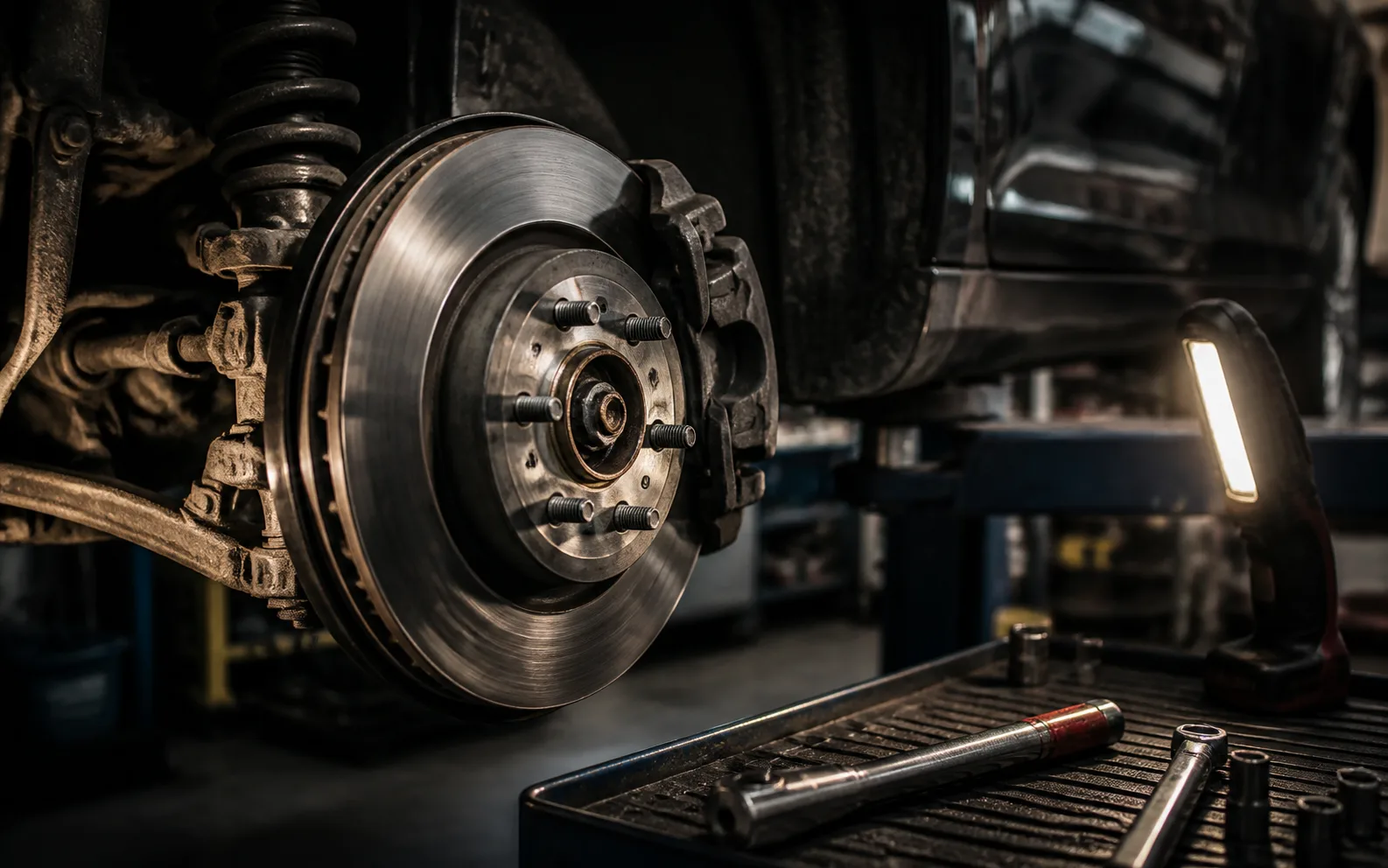
A useful basic form collects name, phone, vehicle, service, preferred time, and notes. Registration number, VIN, mileage, symptoms, and images can be added when staff actually use them. Every extra field must improve triage rather than make mobile completion harder.
Do not promise a confirmed time when the schedule lives elsewhere. Let the customer request an interval and let reception confirm it. Real-time booking requires bay calendars, service duration, technician skills, buffers, opening hours, and rescheduling rules.
When the requirement becomes an online service
A network or high-volume workshop may need accounts, vehicle history, estimates, approval workflows, repair status, documents, and reminders. That scope is closer to online service development and should be designed in stages rather than added to a normal website as one vague feature.
Booking confirmation must be unambiguous
After submission, customers see whether they requested approval or secured a slot. Confirmation includes location, date, contact for changes, and arrival advice. Email or SMS must match CRM status. If an integration fails, the enquiry is queued and retained rather than disappearing behind a success message.
CRM and telephony should not create duplicates
The lead carries source, landing page, service, vehicle, UTM data, and communication consent. CRM checks the customer by phone or email, creates an enquiry, and assigns an owner. Define the difference between a new lead, a returning visit, and a question about an open repair.
Call tracking connects calls with campaigns, but numbers and analytics events must not duplicate. Recording requires a lawful basis and notification. Technology is useful when it improves attribution and handling, not when it merely accumulates data.
Content builds trust before the first visit
The best material already exists in workshop operations: equipment, reception, diagnostic reports, removed components, wear examples, clean bays, approval steps, and completed vehicles. Photography should be authentic and must hide number plates and customer data.
A case explains the initial symptom, tests, discovered cause, approved solution, and outcome. It avoids unnecessary personal details and exaggeration. Several specific examples prove competence more effectively than repeated claims about experienced technicians.
Team, certificates, and warranty
Show roles and specialisms with team consent: diagnostic technician, auto electrician, engine specialist, service advisor. Certificates should be legible and current, while brand marks require proper rights. Warranty terms state duration, coverage, exclusions, and the claim process.
Local SEO brings nearby drivers
For a workshop, geography may matter more than national popularity. Company name, address, phone, hours, and coordinates must remain consistent. The contact page explains access, landmarks, parking, and recovery-vehicle entry. Map profiles use the same data, categories, photographs, and services.
Search architecture covers genuine services and physical locations. Do not create nearly identical district pages where the business has no presence or unique value. A branch page earns its place through its team, photographs, equipment, hours, reviews, and supported repairs.
Reviews and reputation
After a visit, send a neutral request for feedback. Do not select only happy customers or purchase reviews. Respond to criticism factually: identify the job, acknowledge verified issues, and explain the remedy. Future customers can then see a real standard of accountability.
Advertising should land on the matching service
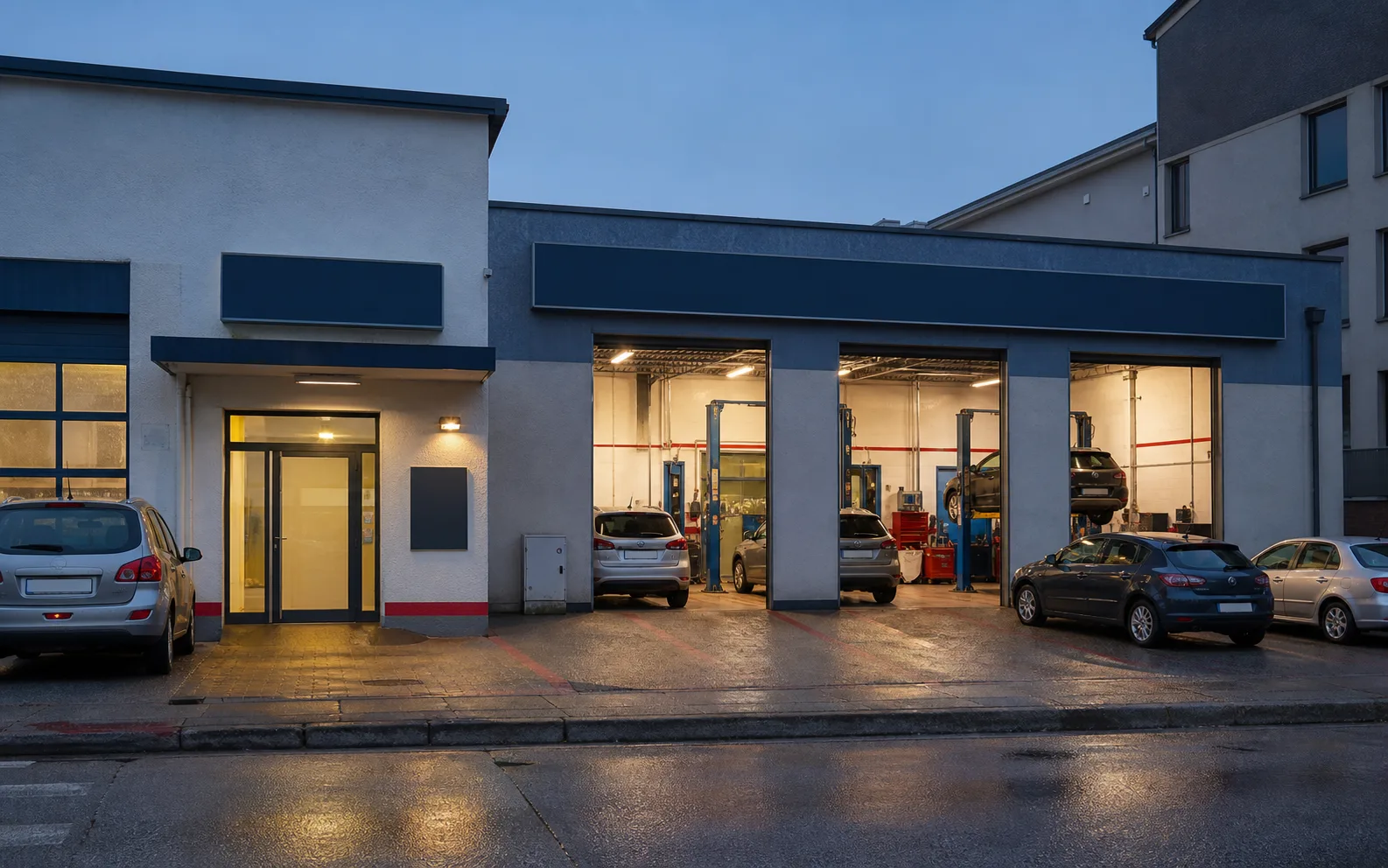
A search for “brake pad replacement” should lead to the brake service page rather than the homepage. There the driver sees the process, price or estimate factors, location, and action. Effective paid search advertising connects keyword, advert, landing page, and actual CRM outcome.
Before launch, verify geography, schedule, negative keywords, mobile calls, forms, and analytics. Promote work according to margin, season, bay availability, and response capacity. Advertising cannot solve unavailable appointments or slow enquiry handling.
Social media supports reputation
Useful workshop content includes symptom explanations, seasonal checks, diagnostic fragments, worn-part examples, and real processes. It complements detailed website pages. Social media promotion should use a realistic content plan, filming permissions, and links to relevant services.
Not every difficult repair needs to become entertainment. Content must hide personal data and plates, avoid unsafe demonstrations, and never ridicule a vehicle owner. Professional consistency builds more trust than one viral clip.
Mobile performance is part of customer service
Most local enquiries happen on phones, sometimes from the roadside. Phone, directions, hours, and booking should work without zooming or searching. Serve compressed modern images, limit fonts and scripts, and avoid blocking the first screen with a map.
Test responsive layouts with real service names, long addresses, and form errors. Call controls must not cover content, menus support keyboards, fields have labels, and contrast remains readable outdoors. Speed is not a technical bonus; it shortens the path to booking.
Analytics should measure more than forms
Track calls, forms, service selection, route requests, and confirmed bookings. Pass acquisition source into CRM and connect it with arrival and repair value. Otherwise a channel may appear successful because it creates many cheap leads that never visit.
Useful measures include confirmed-booking rate, no-shows, response time, demand by service, repeat visits, and customer acquisition cost. Respect privacy, and keep ownership of domains, analytics, and advertising accounts with the business.
Organising development and launch
Discovery defines goals, structure, functions, content, integrations, and quality criteria. The team then creates key prototypes, a design system, responsive layouts, frontend, backend, and administration. Before launch, test forms, CRM, telephony, email, maps, analytics, SEO fields, speed, backups, and permissions.
Prepare content in parallel rather than on the last day: services, pricing rules, location photographs, team data, warranty, contacts, and legal pages. When replacing an existing site, map old URLs and redirects to preserve accumulated visibility.
The website should evolve with the workshop
After launch, monitor errors, enquiries, search visibility, and actual bookings. Fix critical-journey problems first, then add pages based on demand, automate reminders, or extend account and inventory integrations. Operational evidence should determine priority.
An effective auto service website states its specialisation honestly, reduces anxiety around repair, and gives staff enough information before a visit. It cannot replace workmanship, but it makes quality visible, supports capacity planning, and turns local search into a manageable customer flow.