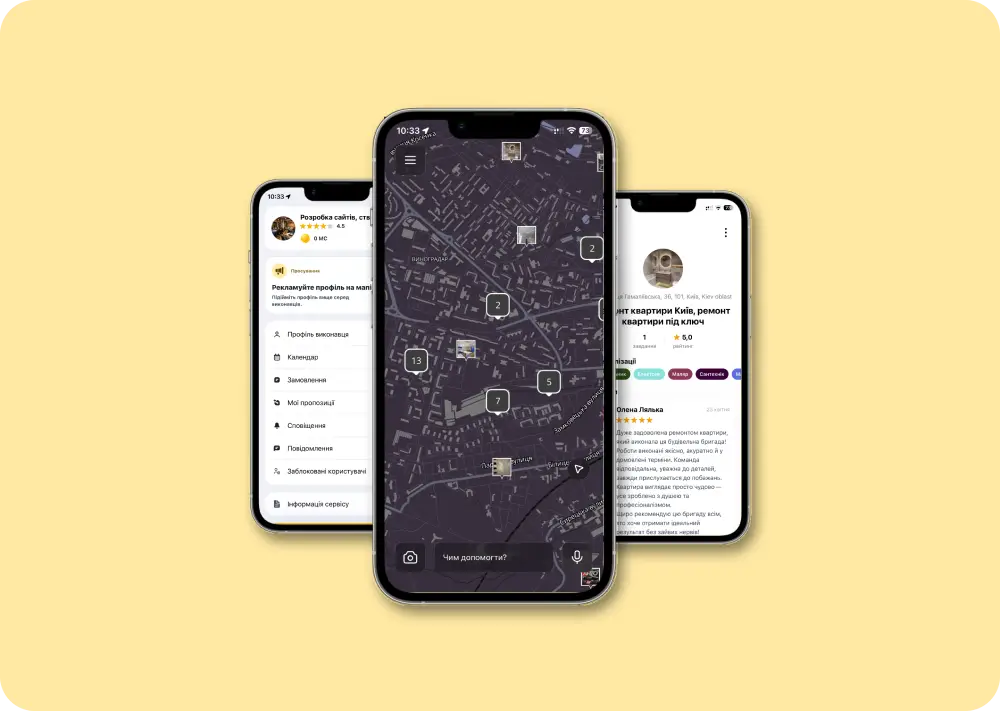
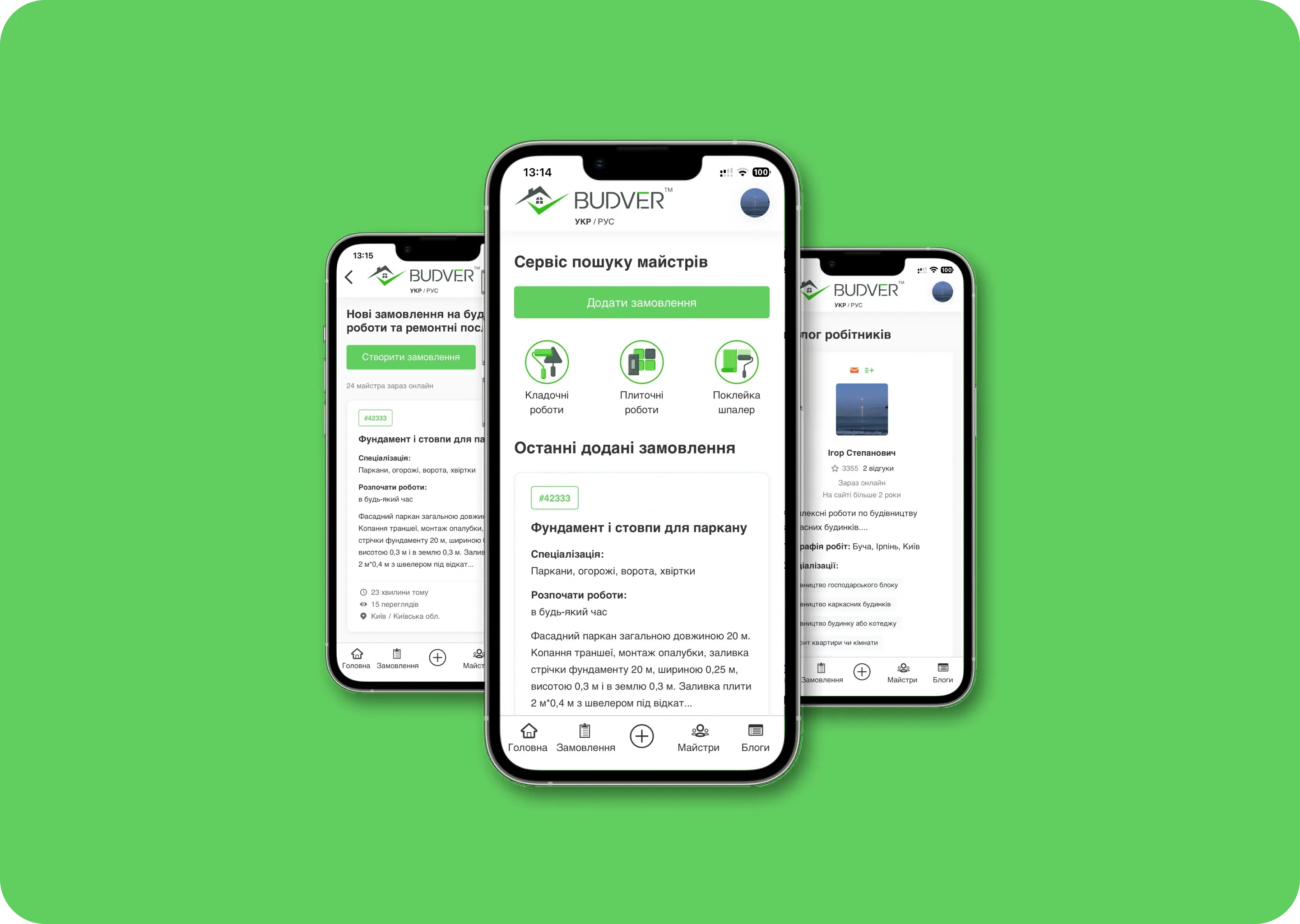
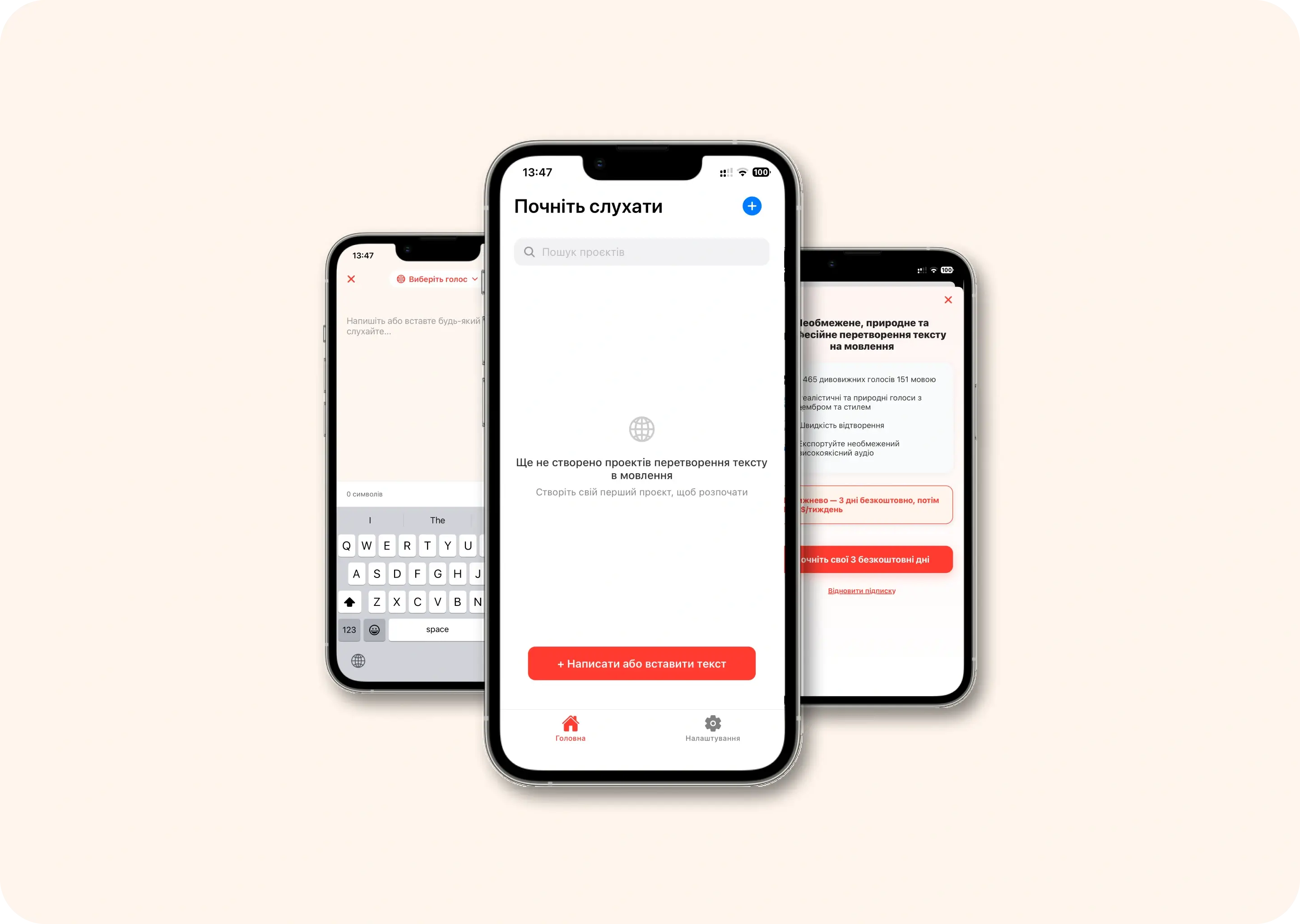
Cross-platform mobile app development follows a clear model: from analytics and design to implementation, testing, and publication in the App Store and Google Play. We consider the specifics of both platforms, performance, UX differences, and marketplace requirements.
We start with an in-depth analysis of the business model, target audience, and competitive environment. We define the key product value, usage scenarios, user roles, and scalability requirements. At this stage, a clear vision of the future app and its technical foundation is formed.
We develop the logic of user interaction with the app: screen structure, navigation, transitions, and core actions. The UX architecture is created considering the behavior of iOS and Android users so that the interface is intuitive and clear without additional learning.
We create a modern interface design that combines usability, aesthetics, and brand recognition. We develop a design system adapted to different screen sizes and platforms so the app looks cohesive and professional.
We implement the client side of the app with a single codebase, connect server logic, APIs, databases, and third-party services. We ensure stable performance, data security, and readiness for high loads.
We conduct multi-level testing: functionality, performance, integration accuracy, and behavior on real devices. Bug fixing and optimization allow us to release a reliable and fast product.
We prepare the app for publishing in the App Store and Google Play, support the moderation process, and set up analytics. After launch, we provide technical support, updates, and further product development.
If you need not just a mobile app, but a full-fledged digital product that solves business challenges and scales with your company — we are ready to join the project at any stage.
By leaving a request, you will receive a preliminary audit of your idea, implementation recommendations, and a transparent estimate of the cost and timeline for cross-platform app development, including future support, updates, and scaling.
| Starter (MVP Cross-platform) | Business (Cross-platform) | Premium (Cross-platform) |
|---|---|---|
| Price: from $5,000 | Price: from $8,000 | Price: from $10,000+ |
| Development — 30–40 days | Development — 50–70 days | Development — 80+ days |
| Unified UX/UI for iOS and Android | Custom design with platform adaptation | Premium UX/UI + user research |
| Core functionality to validate the hypothesis (MVP) | Full business product functionality | Complex logic, automation, and large-scale modules |
| One key usage scenario | Multiple scenarios and user roles | Flexible system of roles, permissions, and access levels |
| Basic cross-platform architecture | Optimized layered architecture | Scalable architecture for growing workloads |
| Typical user flows | Extended interaction scenarios | Custom business processes and complex scenarios |
| Simple APIs or local data | Integrations with APIs, CRM, and third-party services | Payments, subscriptions, complex server integrations |
| Support for iOS and Android smartphones | Smartphones + tablets | Optimization for various devices and screen sizes |
| Basic analytics and events | User behavior analytics | Advanced analytics, reporting, and logging |
| Basic push notifications | Segmented push scenarios | Personalized and automated push campaigns |
| Publishing in App Store and Google Play | Release + moderation support | Full launch + post-release support |
Cross-platform mobile apps in 2026 have become the standard for businesses that want to enter the market quickly while maintaining control over development and maintenance costs. A single app for iOS and Android, unified logic, and a shared codebase make it possible to launch full-fledged mobile products without duplicate development.
If you plan to order cross-platform mobile app development in Kyiv, Lviv, Kharkiv, Odesa, Dnipro, Zaporizhzhia, Vinnytsia, Poltava, Chernihiv, Cherkasy, Zhytomyr, Sumy, Rivne, Khmelnytskyi, Ternopil, Ivano-Frankivsk, Uzhhorod, Lutsk, Kropyvnytskyi, Mykolaiv, Kherson, or Chernivtsi, it is important to understand what determines the cost, which stages the development includes, and which solutions are optimal in 2026.
A cross-platform app is a mobile product that runs on both iOS and Android but is developed as a single system. Business logic, integrations, user scenarios, and most of the interface are shared across both platforms.
Unlike two separate native apps, cross-platform development allows you to:
In 2026, this approach is chosen not only by startups but also by medium and large businesses.
The cross-platform format is optimal if:
In 2026, most services, marketplaces, client portals, logistics, and B2B solutions are launched in a cross-platform format.
Turnkey cross-platform mobile app development is not just programming. It is a full-cycle process where each stage affects quality and final cost.
At the start, business goals, target audience, user roles, and key scenarios are defined. Product logic is formed with scalability in mind, not just the first release.
UX architecture defines how users move through the app, what actions they take, and where decisions are made. In cross-platform projects, it is crucial to balance unified logic with familiar iOS and Android patterns.
The interface is created with brand identity, usability, and adaptation to different screen sizes in mind. In 2026, the focus is not on “visual appeal” alone, but on clarity, speed, and predictability for users.
The client side, server logic, APIs, payment services, push notifications, analytics, authentication systems, and security are implemented. This stage forms the main portion of development cost.
The app is tested across devices, bugs are fixed, and performance and stability are optimized. For businesses, this is critical, as post-release issues are more expensive to fix.
The release is prepared for the App Store and Google Play, moderation is completed, and analytics are configured. After launch, the product is maintained and updated according to business needs.
Development cost is calculated individually, but key factors remain consistent:
In 2026, the cost of turnkey cross-platform mobile app development in Kyiv typically starts from several thousand dollars for MVPs and increases with product complexity. The final price is determined after analyzing business goals and requirements.
The turnkey approach means you receive not just a set of screens, but a complete business tool. The team takes responsibility for architecture, stability, scalability, and compliance with platform requirements.
For businesses, this means:
If you plan to order turnkey cross-platform mobile app development in Kyiv in 2026, it is best to start by discussing the idea, business goals, and long-term product vision. This ensures accurate cost estimation and avoids unnecessary expenses.
Professional cross-platform development is an investment in a product that runs reliably, grows with your business, and remains relevant in the long term.
The cost of a cross-platform mobile app depends on the number of scenarios, user roles, complexity of business logic, integrations, UX/UI, and scalability requirements. MVP solutions start from $5,000, business-level apps from $8,000, and premium cross-platform products from $10,000 and above. The exact price is determined after analyzing the idea, functionality, and architecture of the future product.
Timelines depend on the project scale. A basic MVP can be developed in 30–40 days, a business product in 50–70 days, while a complex premium solution with automation, integrations, and scalable architecture requires 80 days or more. Timelines also include testing, release preparation, and passing moderation in the App Store and Google Play.
A cross-platform app is a product that runs on both iOS and Android while being developed as a single system with a shared codebase. Business logic, integrations, user roles, and most of the interface remain unified, allowing faster launch, reduced development costs, and simplified maintenance.
A cross-platform approach is ideal when you need to quickly launch an MVP, reach both iOS and Android users simultaneously, integrate with APIs, CRM, payments, or analytics, and have the ability to scale the product gradually. It is a popular solution for services, marketplaces, user dashboards, logistics platforms, and B2B products.
Turnkey development includes product analytics, concept creation, UX design, UI design, frontend and backend development, integrations with APIs, CRM, payment services, push notifications, analytics, testing, release in the App Store and Google Play, and ongoing technical support.
The starter package is suitable for validating a hypothesis and launching core functionality with one key scenario. The business format includes full product functionality, multiple scenarios and user roles, adaptation for smartphones and tablets, integrations with CRM and third-party services. The premium solution is designed for complex modules, scalable architecture, custom business processes, payments, subscriptions, automation, and deep analytics.
Yes, in cross-platform development we implement shared business logic while considering UX differences, interface behavior, and platform-specific requirements. This ensures a unified product while maintaining a smooth user experience for both iPhone and Android users.
Yes, integrations are a key part of cross-platform projects. We can connect APIs, CRM, third-party services, payment systems, subscriptions, analytics tools, push platforms, and internal business systems. The level of integrations depends on project requirements and the selected development package.
Yes, we handle release preparation for the App Store and Google Play: builds, app store pages, account setup, moderation, and publishing. In the starter format, this is a basic release; in the business solution, release with moderation support; and in premium projects, full launch with post-release support.
Yes, we design cross-platform solutions with future growth in mind. A scalable architecture allows adding new roles, screens, modules, integrations, analytics, and business scenarios without rebuilding the product. This is especially important for businesses planning long-term service development rather than a one-time release.