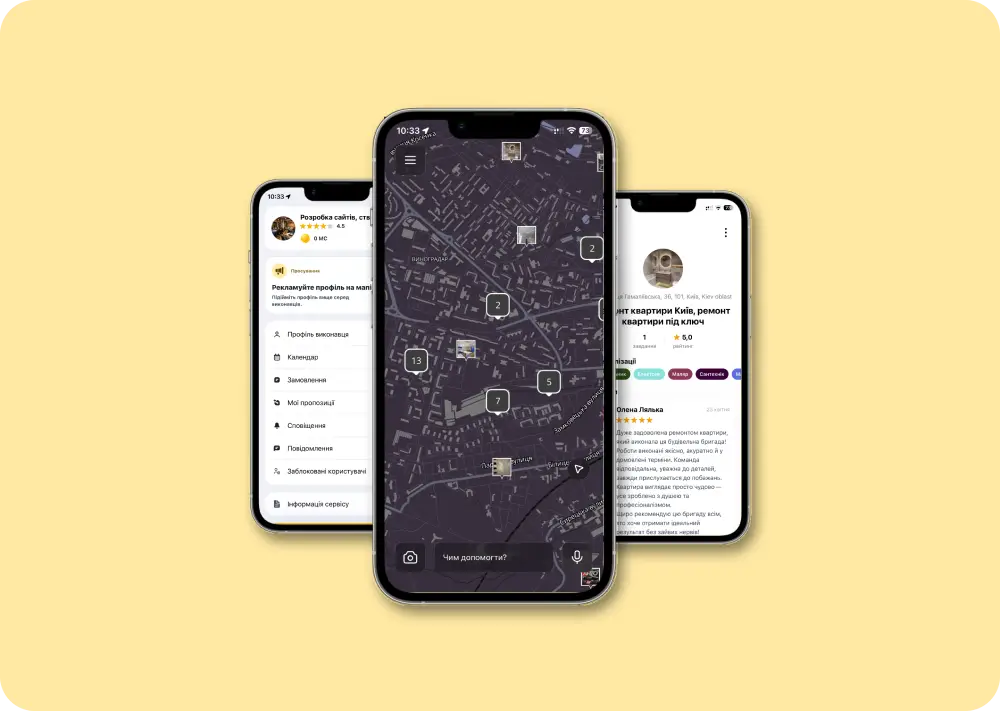
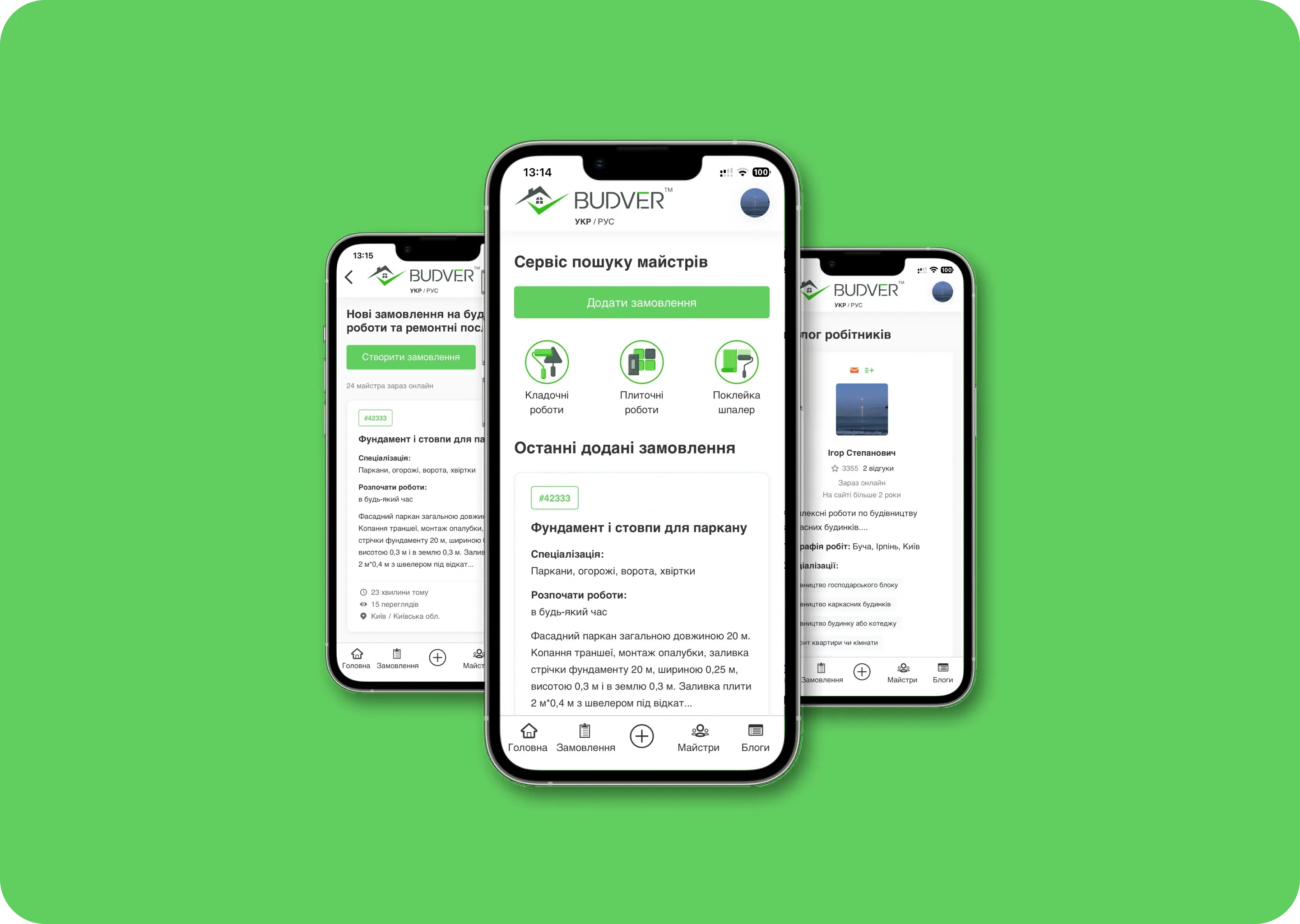
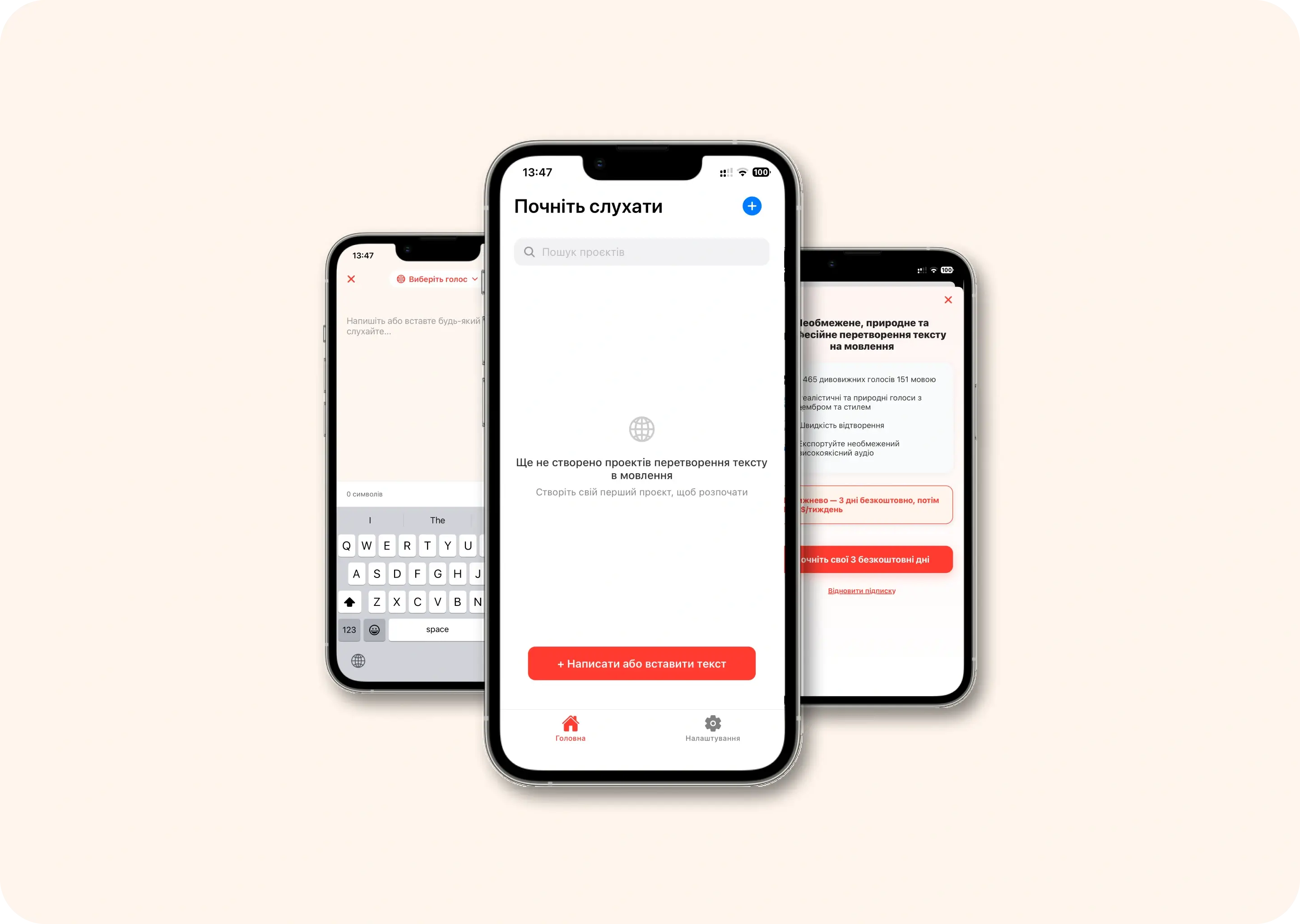
Android app development follows a clearly structured process: from forming the technical concept and user scenarios to programming, testing, and publishing in Google Play. We consider the diversity of Android devices, OS versions, and performance requirements to ensure the product runs reliably in real-world conditions.
We study business goals, the competitive environment, and Android user expectations. We form the app structure and core logic.
We create user scenarios, navigation, and interaction logic, taking into account Android patterns and user behavior.
We design the interface in accordance with Material Design and brand style, adapted for different screen sizes.
We implement functionality, connect backend systems, APIs, and third-party services, ensuring stability and security.
We test the app on various Android devices, fix bugs, and optimize performance.
We prepare the app for Google Play release, help pass moderation, and provide ongoing support.
If you need a team to create an Android app that truly solves business challenges, not just exists in Google Play — we are ready to join the project at any stage: from idea to scaling.
Leave a request — we will analyze your concept, propose the optimal technical solution, and calculate the budget and development timeline, considering future growth, integrations, and support.
| Basic (MVP Android) | Optimal (Business Android) | Advanced (Premium Android) |
|---|---|---|
| Price: from $4,000 | Price: from $7,000 | Price: from $10,000+ |
| Development — 25–35 days | Development — 45–65 days | Development — 75+ days |
| UX/UI for Android based on Material Design | Custom UX/UI for Android | Premium UX/UI + UX research |
| Core Android app functionality (MVP) | Full business functionality | Complex business logic and process automation |
| 1 primary usage scenario | Multiple scenarios and user types | Flexible roles and permissions system |
| Basic Android architecture | Optimized app architecture | Scalable Android architecture |
| Typical user scenarios | Extended interaction scenarios | Custom business and user scenarios |
| Local data / simple APIs | APIs, CRM, third-party services | Payments, subscriptions, complex API integrations |
| Support for Android smartphones | Smartphones + Android tablets | Optimization for various devices and screen sizes |
| Basic analytics | User behavior and event tracking | Advanced analytics, logging, reports |
| Push notifications (basic) | Push notifications with segmentation | Personalized push scenarios |
| Publishing in Google Play | Google Play + moderation support | Full release + post-release support |
Android app development in 2026 remains one of the most effective tools for digital growth for businesses. Android is the largest mobile platform in Ukraine and worldwide, allowing companies to reach the maximum number of users and create a stable channel for sales, communication, or process automation.
If you plan to order a turnkey Android app in Kyiv, Lviv, Kharkiv, Odesa, Dnipro, Zaporizhzhia, Vinnytsia, Poltava, Chernihiv, Cherkasy, Zhytomyr, Sumy, Rivne, Khmelnytskyi, Ternopil, Ivano-Frankivsk, Uzhhorod, Lutsk, Kropyvnytskyi, Mykolaiv, Kherson, Chernivtsi, or any other city in Ukraine, it is important to understand in advance what forms the development cost, which stages the project проходит, and what affects the timelines for app creation in 2026.
Turnkey Android app development is a full-cycle product creation process: from idea to publication in Google Play and ongoing support. The business receives a ready-to-use application without the need to coordinate multiple contractors or manage technical processes independently.
The turnkey format typically includes:
The price of Android app development in Kyiv in 2026 depends not on template packages but on the actual complexity of the project. Key factors that shape the budget include:
The more usage scenarios, integrations, and logic involved, the higher the development cost. A simple app with basic screens costs significantly less than a system with personalization, analytics, and automation.
Custom Material Design implementation, adaptation for different screens, tablets, and usage scenarios directly affect the budget.
Connecting CRM systems, payment gateways, analytics tools, external APIs, or internal business services increases project complexity and cost.
In 2026, more companies are planning budgets for ongoing Android app development, updates, and scaling from the start.
In 2026, average cost ranges are:
The exact price is determined after analyzing project requirements, functionality, and technical specifications.
Development timelines depend on the same factors as pricing. On average:
It is important to consider that publishing in Google Play and passing moderation also require time, especially for new developer accounts.
In 2026, Kyiv remains one of the key Android development hubs in Ukraine. It brings together experienced teams that work according to modern standards, understand business logic, and focus not only on code but on real results.
Advantages of ordering an Android app in Kyiv:
In 2026, an Android app is not just a mobile version of a service but a full-fledged digital asset. It enables businesses to:
That is why companies increasingly choose turnkey Android app development instead of temporary or template solutions.
If you plan to order a turnkey Android app in Kyiv in 2026, it is worth approaching it as an investment in business growth. A properly designed and implemented Android app pays off through increased sales, automation, and stable customer engagement.
Leave a request for a consultation — and you will receive a clear understanding of the cost, timelines, and possibilities for creating an Android app tailored to your business.
The cost of Android app development depends on the type of product, number of scenarios, UX/UI complexity, integrations, analytics, and scalability requirements. MVP solutions start from $4,000, business apps from $7,000, and complex premium Android products from $10,000 and above. The exact budget is formed after analyzing requirements, functionality, and the architecture of the future app. :contentReference[oaicite:0]{index=0}
Timelines depend on project complexity. A simple MVP Android app can be developed in 25–35 days, a business solution in 45–65 days, while large-scale products with complex business logic, payments, user roles, and advanced integrations require 75 days or more. It is also important to consider time for testing, optimization, and Google Play review. :contentReference[oaicite:1]{index=1}
Turnkey Android app development includes analytics, concept creation, UX/UI design based on Material Design, development, integrations with APIs, CRM, and other services, testing on various devices, publishing on Google Play, and ongoing technical support. As a result, the business receives a ready-to-use product without the need to coordinate multiple contractors. :contentReference[oaicite:2]{index=2}
MVP Android is suitable for quickly launching an idea with one key scenario, basic architecture, and minimal integrations. Business Android is designed for companies that need full functionality, multiple scenarios and user types, analytics, and integrations with CRM or third-party services. Premium Android is intended for complex mobile products with advanced business logic, personalization, subscriptions, scalable architecture, and full process automation. :contentReference[oaicite:3]{index=3}
The cost is influenced by the type and scale of the product, number of screens and scenarios, custom UX/UI design, integrations with APIs, CRM, or payment systems, tablet support, analytics, push notifications, and backend requirements. The more business functions the app covers, the higher its cost, but also the greater its business value. :contentReference[oaicite:4]{index=4}
Yes, we consider the diversity of Android devices at the design and development stage. In basic projects, this includes support for Android smartphones; in optimal solutions, both smartphones and tablets; and in premium products, dedicated optimization for different screen sizes, resolutions, and usage scenarios. This is critical for stable real-world performance. :contentReference[oaicite:5]{index=5}
Yes, we can integrate the Android app with CRM, external APIs, payment systems, subscriptions, internal business services, analytics platforms, and other solutions. In basic formats, these may be simple APIs or local data; in Business Android, integrations with CRM and services; and in Premium Android, complex APIs, payments, subscriptions, and automation. :contentReference[oaicite:6]{index=6}
Yes, push notifications can be included in all development formats. In the basic package, these are simple notifications; in Business Android, segmentation by events or user groups; and in Premium Android, personalized push scenarios, automated triggers, and deeper engagement and retention strategies. :contentReference[oaicite:7]{index=7}
Yes, we support the release process on Google Play: preparing builds, assisting with account setup, creating store page materials, passing moderation, and publishing. In the basic format, this includes publishing; in Business Android, moderation support; and in Premium Android, full release and post-launch support. :contentReference[oaicite:8]{index=8}
Yes, we design apps with future growth in mind from the start. A scalable Android architecture allows adding new modules, integrations, user roles, scenarios, analytics, and automation without rebuilding the app. This is important for startups, business services, marketplaces, and products planning long-term growth. :contentReference[oaicite:9]{index=9}